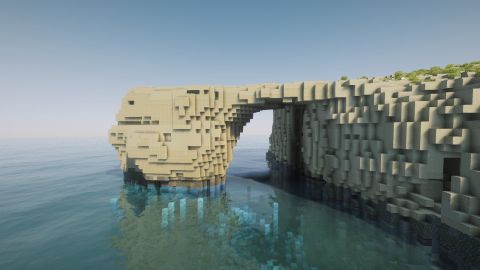
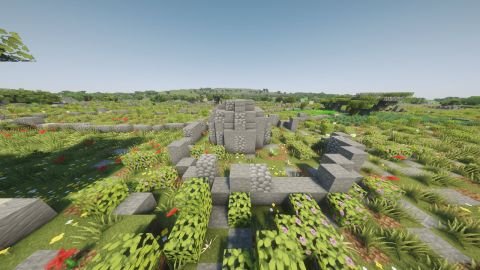
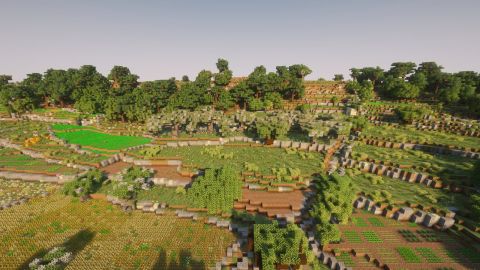
The Gozo Citadel, still under construction
The Gozo Citadel is the hardest thing I am building in Malta in Minecraft, and it is far from finished. Notes from the middle of the work: what I am trying this week, what failed on the way, and what is still unsolved.
In short: The Citadel in Victoria is the hardest place I am building in Malta in Minecraft, and it is nowhere near finished. This week I am working on a stone band along the bastion walls, the line where the cliff's rock ends and the wall begins, and a puzzle with slanted walls that I haven't solved. This post is a look into the middle of that work: what I am trying now, what failed on the way here, and what I'm working on next.
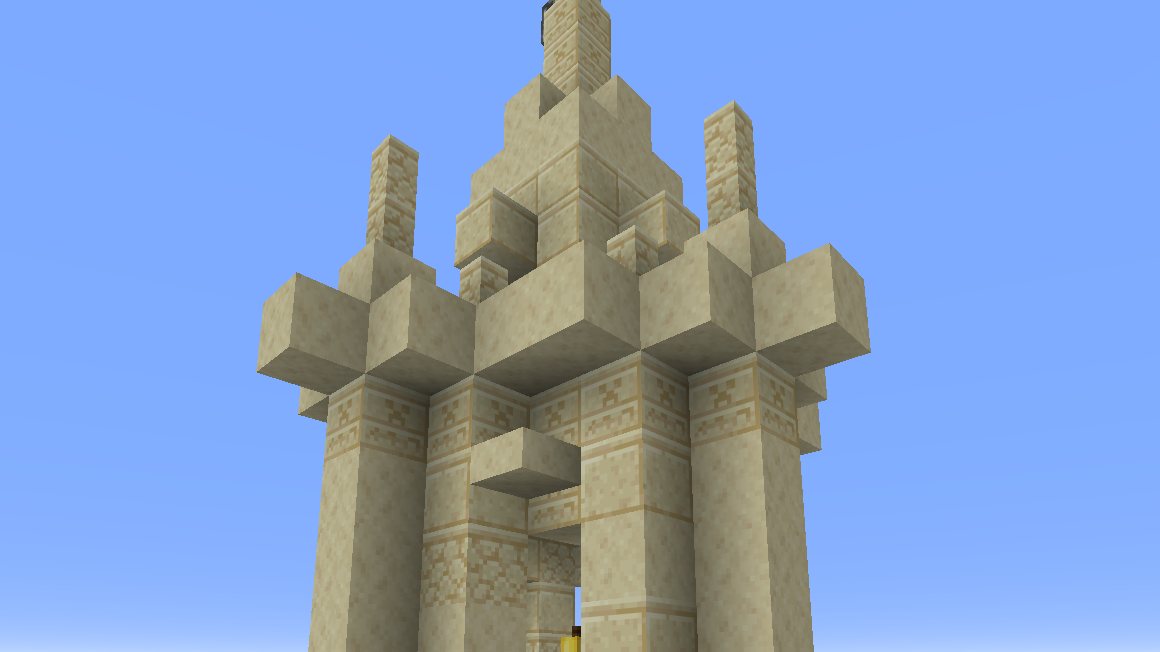
This week on the hill
Right now I am working along the outer walls, one stretch at a time. On the real bastions (the big pointed corners of the fortress) a rounded stone band runs a few metres below the top. I am adding it as a thin line of stair blocks, and each stretch shows a new place where it doesn't quite meet the next.
I am also tracing where the hill's natural rock stops and the built wall starts, and one bastion face carries a test I haven't judged yet.
None of this is finished. Most of last week's work is still waiting on a final decision, and none of the Citadel is in the Malta world yet. It lives in a separate flat test world.
Why the Citadel is hard
The Citadel is a walled town on top of a hill in the middle of Gozo, with a cathedral, tiny houses packed against each other, and huge stone walls that lean back as they rise.
In the game, 1 block is 1 m. That causes three problems here.
- Walls at odd angles. Minecraft blocks all face north, south, east or west. The Citadel's walls run in every direction. A wall at an angle has to step one block at a time, like a staircase seen from above.
- Things smaller than a block. A stone band on a real wall sticks out by 30 cm. A block sticks out by 1 m.
- The hill itself. The walls stand on rock, and where the rock stops and the wall starts is hard to see even in real life.
How I got here: the scan copied block by block
Heritage Malta made a 3-D scan of the whole Citadel from photos: a coloured model of every wall, roof and street, accurate to about half a metre, free to use with credit. In October I placed it on the map and filled every cube of space it covered with a block.
The first result looked like someone had dropped a bomb on a hill. The ground under the walls came from a different survey, which had smoothed the hill away, so walls hung in the air. I let the scan shape the ground too. That gave the walls something to stand on, and it showed the next problem.
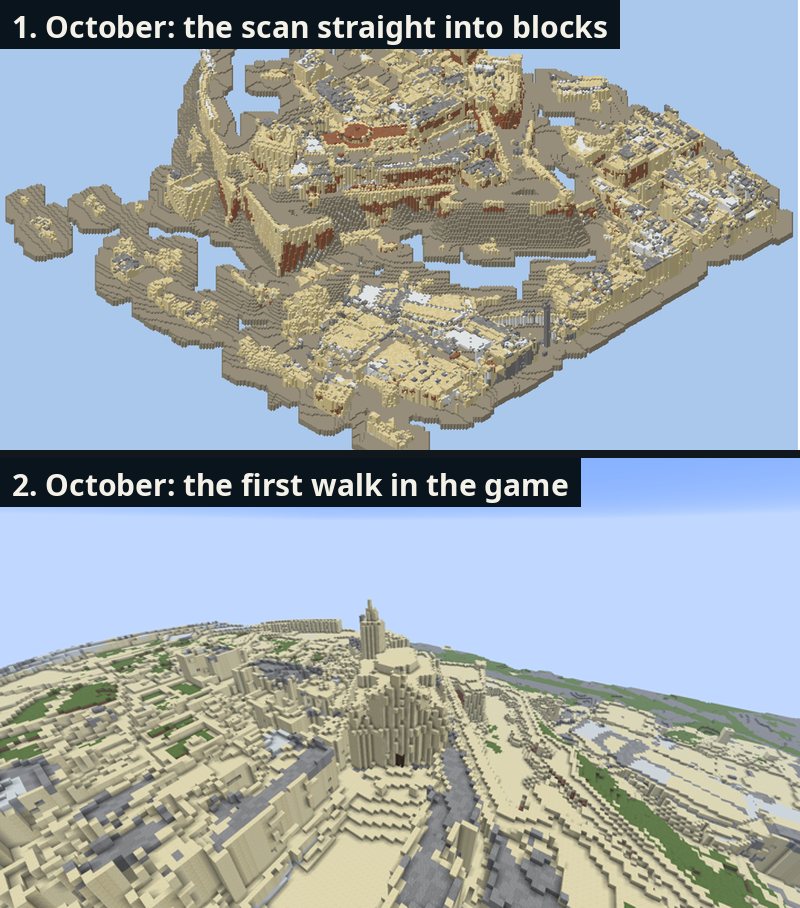
Over the following week I compared it with 234 street-level panoramas and made about 45 rounds of fixes. It never looked right:
- The scan's bumps became blocks. A scan is never perfectly smooth, so flat walls came out as ragged columns and floors had one-block lumps.
- House fronts were flat walls with coloured spots where doors and windows should be.
The way I work now: the scan measures, I build
In early November I started again with one rule. The scan only measures. Every part (a wall, a roof, a floor, a house) is described as what it is, with its real size and position taken from the scan, and the blocks are drawn from that description.
I began with the Cathedral, alone in an empty flat world. It has been through 24 rounds so far, and it still has problems:
- The front sits at about 34 degrees to the block grid. I tried smoothing it onto the grid, and it looked worse, so it went back to its true angle. The price is that its walls read as vertical grooves.
- I built the bell tower both ways, at its true angle and squared to the grid. The true angle looked closer to the real tower, grooves and all.
- A floating finial. A stone ornament on the front hung one block beside its pedestal, because the two were rounded to the grid separately.
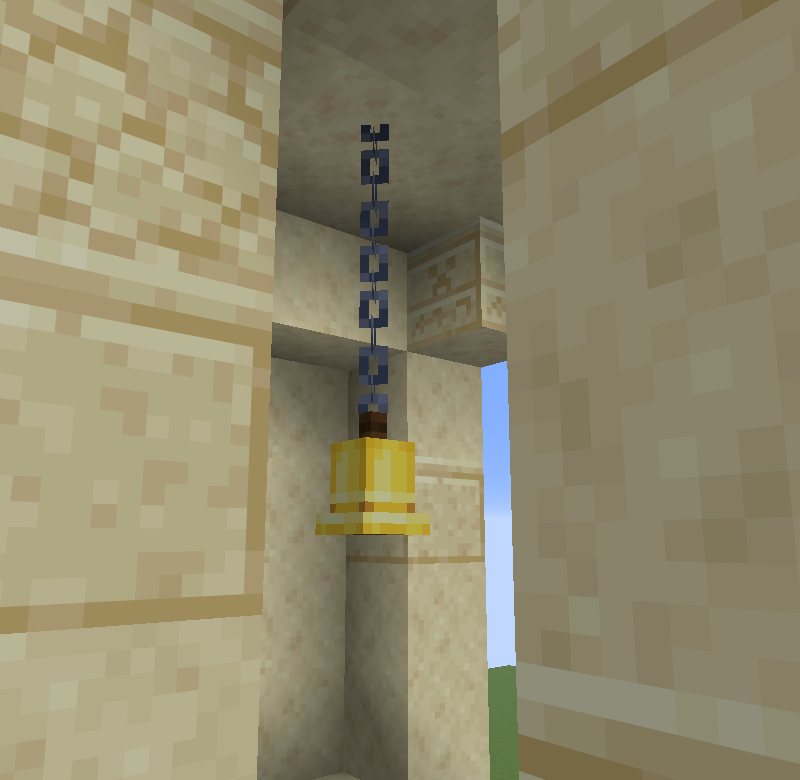
- Four bells. Pictures from all four sides showed a bell in every opening, so the first try hung four. The real tower has one bell, seen through every opening. Now there is one, hung high.
The walls on the hill came next, about 38 rounds of them so far. The biggest change was to draw them by hand as clean lines, with the scan only as a guide. Drawn lines got rid of most of the ragged columns. They did not fix the slanted faces, which is this week's puzzle.
The test world, zone by zone
Then the houses, in a flat test world I call the building pilot, starting behind the Cathedral.
My first houses copied the scan column by column again, so they came out as stepped lumps with stray blocks in front of the doors. A small house is walls, a roof and a door you can walk through, so that is how each one is built now, from its outline and its levels. Most of the town is built once that way, and most of it has not been through a second pass.
Two more rules came from mistakes here:
- A fix touches only its own area. Early on, one rule change made for a single spot changed 83 columns across the pilot. Now everything I have said yes to is locked block for block.
- Show one sample first. I once made every white roof a half-block slab at once, and they all looked flat.
To mark problems I use a 3-D viewer that shows the blocks beside the scan. I click a block and write a note, such as "something added this continuous skirt around the walls". Each note becomes a fix, and many become a test that every later build has to pass.
The pilot now covers the whole town inside the walls, split into six zones. Each zone has been built at least once, and each is still open.
Fresh "eyes" before mine
After working on an area for days you stop seeing it. So before any round reaches me, a reviewer who has seen nothing of the work gets only pictures: first the build alone, then the real place and the build from the same camera. It lists everything that looks wrong.
Its first look at the Cathedral square found 22 things that had passed every check: an arch far too small, shelves of stone sticking out of walls, a hole to the sky. It also found that my comparison cameras stood up to 3 m from where the real photos were taken. Every round since has come back with a new list.
For harder questions there are two independent readings. The line between the cliff's rock and the built wall is a good example. One reading traces it every half metre from the scan, a second traces it again without seeing the first, and only where both agree does the cliff become rock. That work is going on now, stretch by stretch.
Even two readings can miss. Where the north wall turns there is a pale, squared mass, and one reading called it a masonry buttress while the other could not settle it. It is rock: a cut cliff face, and cut rock is paler, almost white, so it looks like dressed stone. The same goes for some pale pillars low on the west side. That is now a rule for every reading of the cliff that is still to come: a pale, square face is not proof of a wall.
Tried and dropped
Plenty of what I have tried did not survive:
- The skirt. A strip of sandstone one or two blocks high ran along the foot of the south bastion's walls, because each wall face laid its own floor at the wrong height. It is gone.
- The clock turret, built two ways: turned 15 degrees like the real one, or squared to the grid. The angled one had a notched top, so I chose the square one. A ring of stair blocks for its cornice made the top far too heavy, so for now it is a flat band.
- The wrong gate. The main door at the top of the Citadel's stair had been given a carved frontispiece (a decorated stone frame around a gateway). A closer look showed that the main door is a later, plain opening cut through the wall. The carved frontispiece belongs to the small old gate about 10 m to the right, beside the lift. The main door is being redesigned plain right now, and the old gate will be looked at later.
- A paler rock block. The rock in the game is grey, and the real cliff is buff and cream. This is a limitation of vanilla minecraft's block palette.
Still unsolved
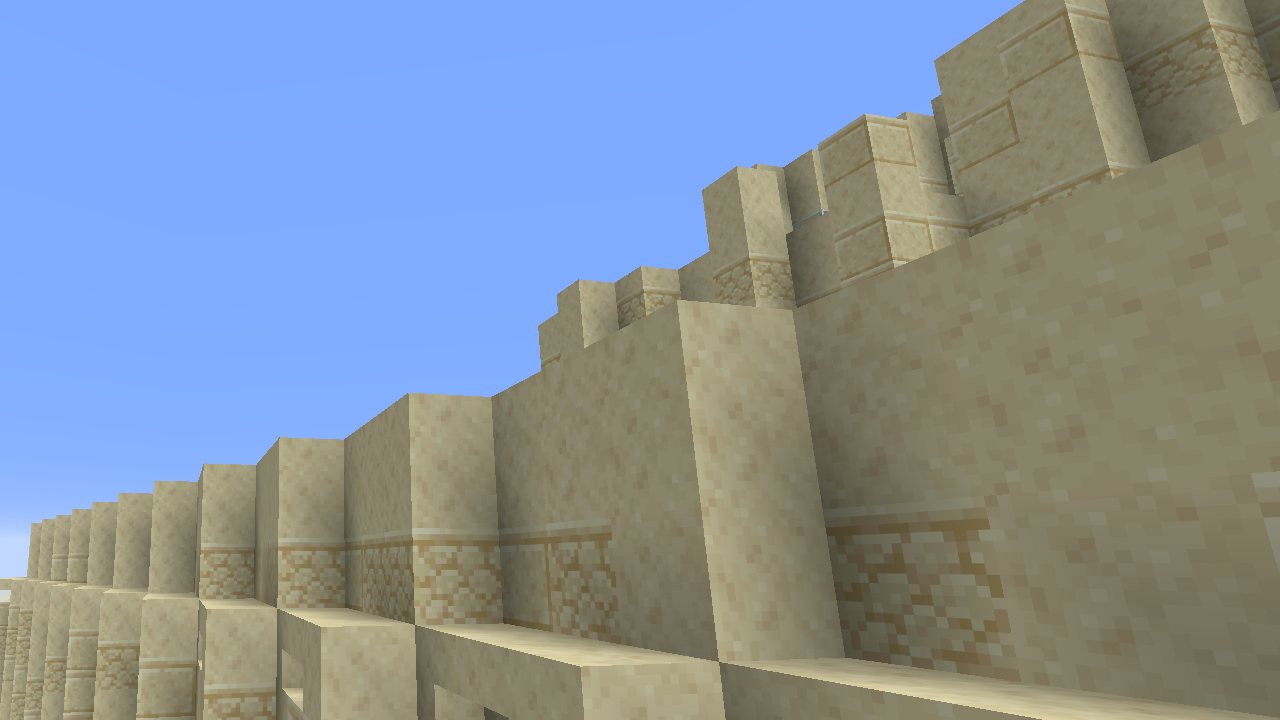
Slanted walls look ribbed. A real bastion face is a flat, smooth plane. When that plane runs at an angle to the grid, each block steps back from the last, and from the ground the wall reads as a row of upright pillars with a sawtooth top. Right now a single test on one face fills each step with stair blocks of the same stone, to see if the grooves soften. I haven't judged it yet. If it works, it goes onto the other faces. If it doesn't, I need another idea.
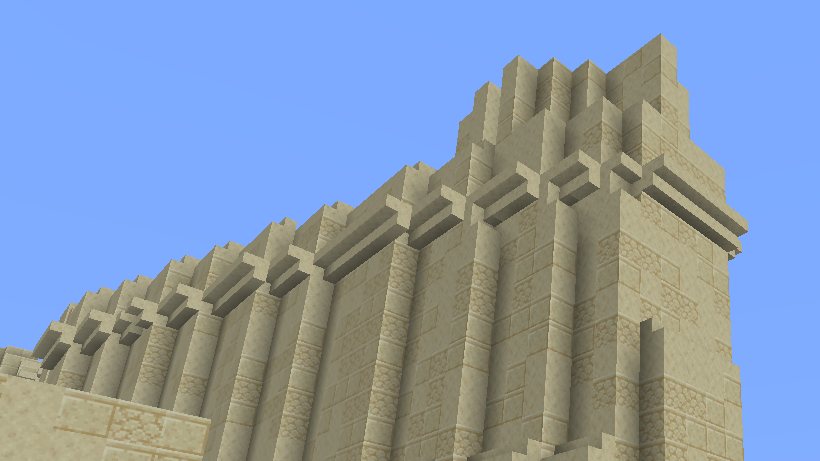
The rock is too dark. The grey stone reads as cliff, but it is clearly darker than the real one. I have kept it for now, and it is still an open question.
Not close to finished
The Citadel is not close to finished, and work on it continues. A few parts around the Cathedral have my yes inside the test world, and even those may change once the rest catches up with them.
It is slow on purpose. Every step is a choice about how a real place should look in blocks, and a wrong choice copied across the whole town costs far more than one round on one wall. So each round changes one thing, keeps the old version one switch away, gets checked by fresh eyes, and then waits for my yes.
Next: deciding on the test against the ribbed look, carrying the stone band round the rest of the bastions, the plain main door, and a second reading of the lower cliffs before any more of them turn to rock.
What it has taught me so far
- The scan measures. A builder builds. Copying a scan block for block gives rubble with the right outline.
- Name the thing first. A house, a stair, a stone band: build that, and the details follow.
- Cut rock is pale. Not everything square and white is a wall.
Did you photograph the Citadel's walls or the cliff under them, especially the north and west sides? Get in touch. For how photos become a 3-D model, see the Azure Window, measured.
Technical details
- Main source: Heritage Malta's photogrammetry model of the Citadel (Sketchfab, 2022, CC BY-SA), about 1 million triangles, fitted to the Planning Authority's 2018 surface model (heights within about 0.3 m).
- Also used: 234 Street View panoramas, each camera solved on the model (209 of 234), the 2018 aerial photo, and public walking and drone videos turned into 3-D models (about 0.2 m from the scan) to measure the Cathedral front, the steps and an arch.
- The reviewer and the second readings are separate AI sessions that see only pictures and know nothing of the work.
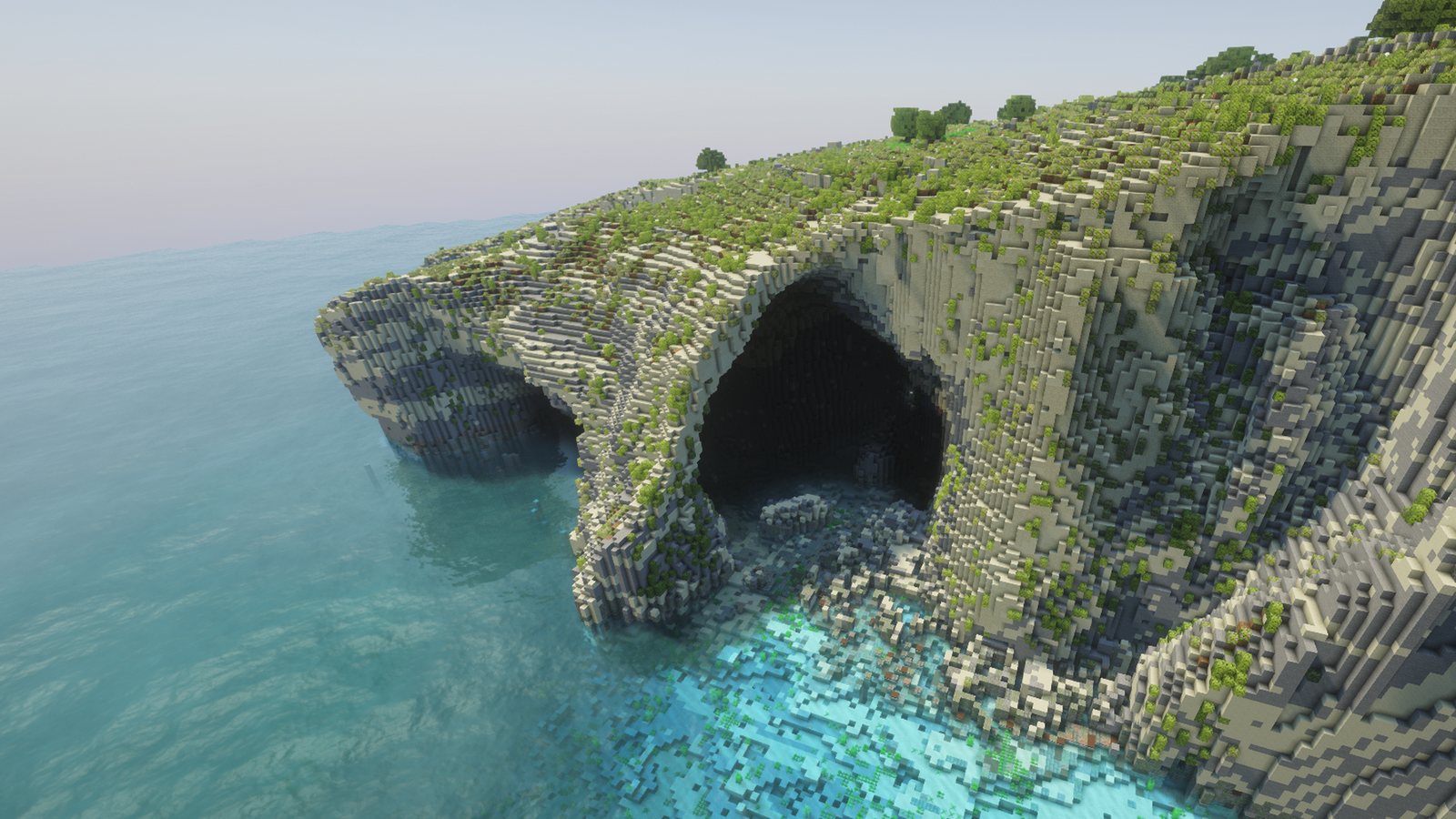
- Pictures: in-game shots and one render, no shaders.